
High Versatility Equipment for Modular Use in Laboratories
About Us
What We Do
HVEMUL is an engineering company specializing in electronics and mechatronics design — taking your project from concept to finished product.
We combine PCB design, 3D modeling, and mechanical-electronic integration to deliver custom hardware solutions built precisely around your requirements. Our services include:
Electronics Design — Custom PCB design, embedded systems, power electronics, industrial electronics, and instrumentation.
3D Modeling & Mechanical Integration — Enclosure design, mechanical-electronic integration, and full product geometry development.
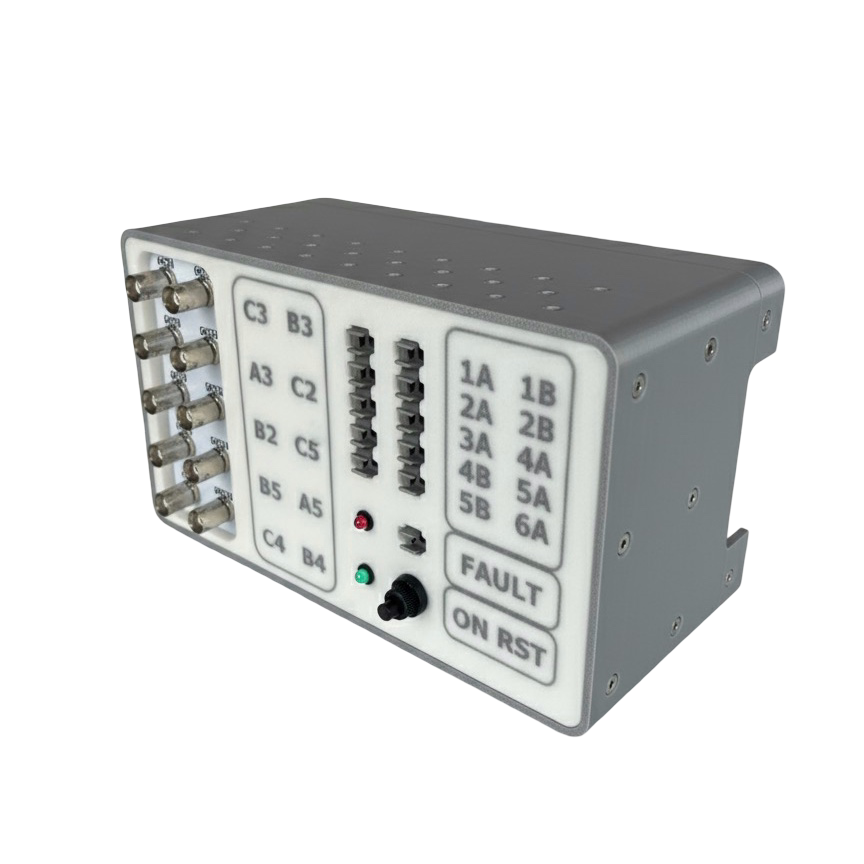
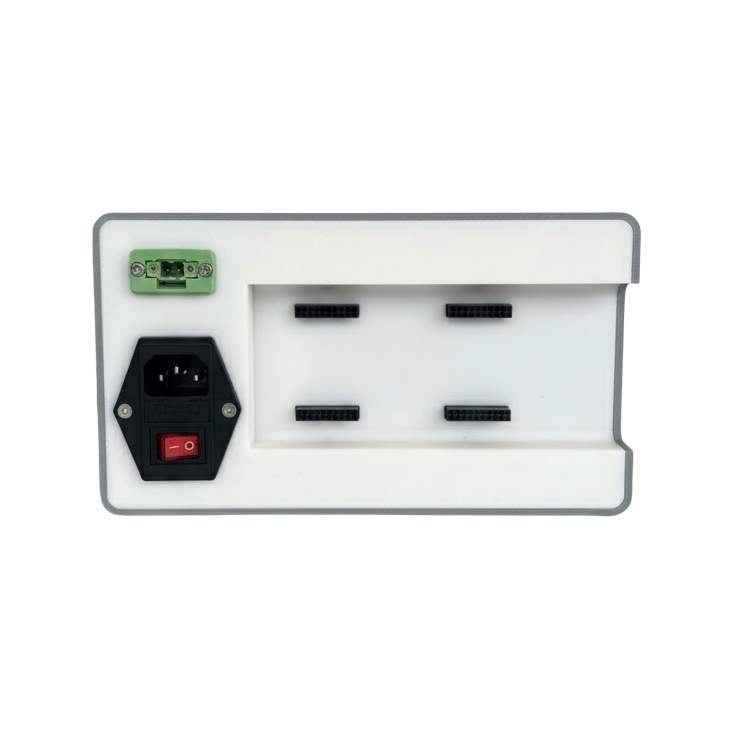
Modular Platforms — Ready-to-deploy hardware platforms for research, rapid prototyping, and scalable development.
Technology Integration — Bridging hardware, firmware, and mechanical systems into cohesive, production-ready solutions.
Project Development — End-to-end engineering support, from feasibility and design to manufacturing and validation.
Our Mission
To make professional hardware development accessible to research teams and companies worldwide delivering precise, reliable, and efficient engineering solutions that turn ideas into reality.
Our Vision
To become a globally recognized engineering partner for organizations that need high-quality, custom hardware known for technical excellence, modular thinking, and the ability to bring any project from concept to finished product, regardless of scale or industry.
Our Impact
Since our founding in 2025, HVEMUL has been enabling research and industry through hardware that's designed to perform. Our platforms are already supporting cutting-edge work at Universidad Técnica Federico Santa María (UTFSM), AC3E, and research institutions around the world. We work with clients and partners across universities, research centers, and industry delivering engineering solutions built for real-world demands. Our modular design philosophy ensures every project is right-sized: no bloated systems, no wasted resources, just precise hardware tailored to the job. As we grow, our mission remains the same: make professional hardware development accessible to teams everywhere
Our Story
HVEMUL was born in 2025 from a simple observation: power electronics research shouldn’t be this complicated.
While working as an R&D engineer at the Advanced Center for Electrical and Electronic Engineering (AC3E), founder Polidoro Canales witnessed the same obstacles over and over again. Universities across Chile were launching new power electronics research programs, driven by the country’s massive potential in clean energy—from the solar-rich Atacama Desert to the wind-swept southern regions. Yet students and researchers consistently struggled with the same problem: existing equipment platforms were overcomplicated, expensive, and created unnecessary barriers to entry.
The available solutions required specific computers, physical license keys, strict installation protocols, and weeks of learning proprietary programming environments before researchers could even begin their actual work. Equipment was oversized with features that went unused, yet came with premium Price tags that made accessibility a challenge for emerging research groups.
On the same floor at AC3E, Alejandro Stowhas was pursuing his PhD at Universidad Técnica Federico Santa María (UTFSM) and experiencing these same frustrations. Through conversations and shared experiences—encouraged by supportive faculty including Professor Christian Rojas from UTFSM and Professor Samir Kouro—Polidoro and Alejandro realized they were uniquely positioned to solve this problem.
Polidoro, with his mechatronics engineering background from Universidad de Talca, brought deep hardware design expertise and complete understanding of product development from geometry to internal architecture. Alejandro, with his electronics engineering degree, master’s, and ongoing PhD from UTFSM, contributed academic insight and control systems expertise. Both maintained collaborative relationships with multiple universities, giving them direct insight into what researchers truly needed.
Together, they founded HVEMUL—an acronym for High Versatility Equipment for Modular Use in Laboratories. The name itself reflects their Chilean roots: inspired by the huemul, an endemic Chilean deer, with a creative twist (changing “U” to “V”) that makes it distinctively their own.

Polidoro Canales
Our Team
HVEMUL is led by co-founders Polidoro Canales and Alejandro Stowhas, supported by a network of academic advisors including Professor Christian Rojas and Professor Samir Kouro from UTFSM, along with the broader AC3E research community. We’re a spin-off with deep roots in Chilean engineering excellence, and we’re just getting started.

Alejandro Stowhas
Collaborators
Assessors who support our technical proposal
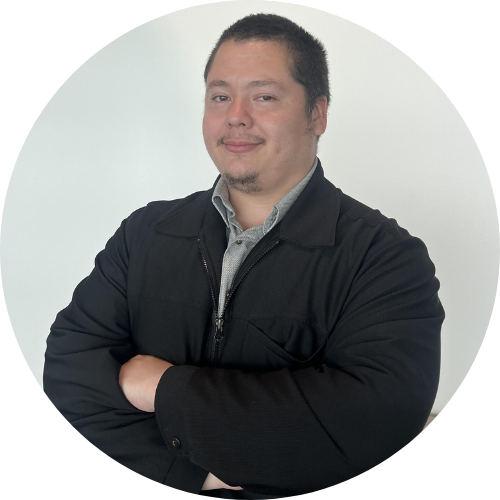
Franco Jorquera
Position: Specialist Advisor in Robotics and N-trailers
Institution: USM / AC3E
Description: Ph.D. in Electronic Engineering and Industrial Civil Engineer from USM. Specialist in mobile robotics and dynamic systems modeling. His doctoral research on vehicle dynamics in complex terrain and LuGre friction models forms the scientific basis for the predictive system monitoring system.
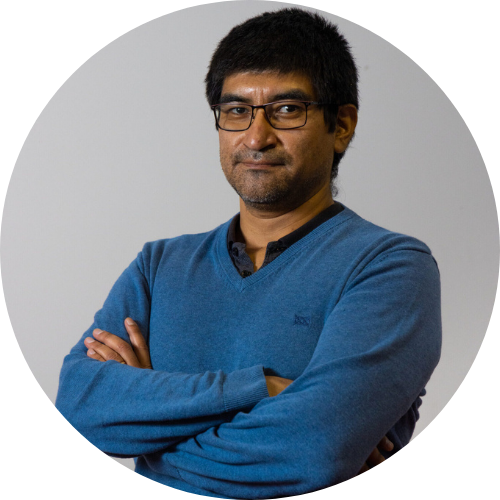
Christian Rojas
Position: Specialist Advisor in Power Electronics
Institution: USM
Description: Faculty member in the Department of Electronics at the Federico Santa María Technical University. Ph.D. in Engineering, specializing in power electronics and converter control. Advisor on sensor architecture and power converters.22
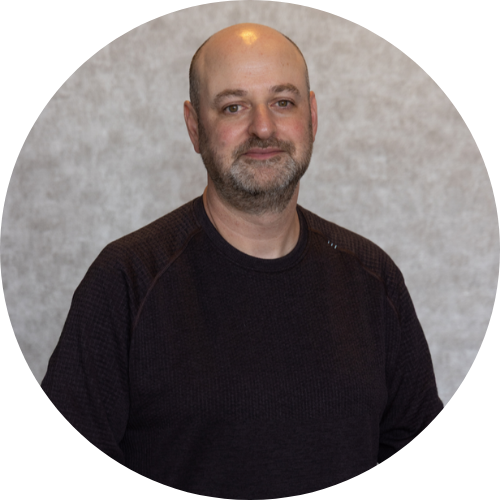
Samir Kouro
Position: Specialist Advisor in Power Electronics
Institution: USM / AC3E
Description: IEEE Fellow and faculty member in the Department of Electronics at USM. An internationally recognized researcher in power electronics and electric drives. The first Latin American to receive Japan’s Nagamori Award. His scientific expertise strengthens the HVEMUL proposal.
Christian Rojas
Position: Specialist Advisor in Power Electronics
Institution: USM
Description: Faculty member in the Department of Electronics at the Federico Santa María Technical University. Ph.D. in Engineering, specializing in power electronics and converter control. Advisor on sensor architecture and power converters.22
Samir Kouro
Position: Specialist Advisor in Power Electronics
Institution: USM / AC3E
Description: IEEE Fellow and faculty member in the Department of Electronics at USM. An internationally recognized researcher in power electronics and electric drives. The first Latin American to receive Japan’s Nagamori Award. His scientific expertise strengthens the HVEMUL proposal.
Projects
Technology developed to address challenges in industry and academy.
Modular Systems for Power Electronics
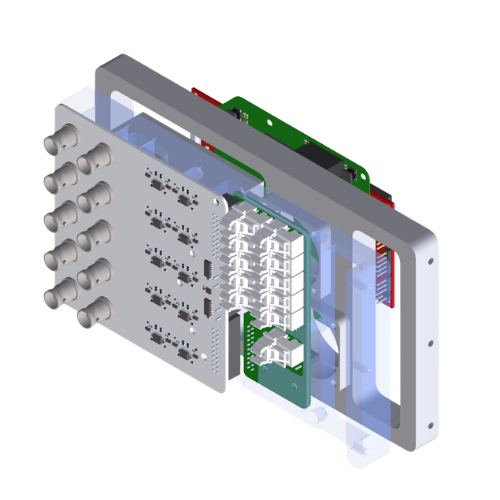
A high-density energy storage system designed and manufactured entirely in-house. It incorporates capacitor banks with a proprietary metal-mechanical structure and custom-designed PCBs, tailored for industrial power electronics applications.
Predictive Monitoring System for N-trailers
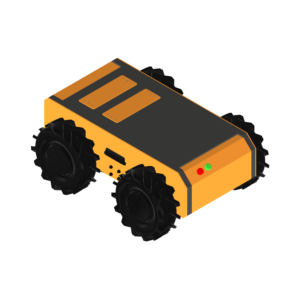
A solution that integrates LiDAR and IMU sensors for topographic mapping of mining routes and estimating tire wear on heavy-duty trucks. It uses LuGre dynamic friction models to calculate mechanical stress in real time, enabling the detection of road irregularities before they lead to catastrophic failures.
Engagement
Strategic partnerships that support our value proposition
HVEMUL keeps strategic alliances with academic institutions of excellence and specialized technology companies, strengthening our capacity for research, development, and implementation.